Timeboxing the Search Day: 90-Minute Focus Sprints for Sustainable Productivity
Ads
Treating a job search like an unstructured eight-hour workday rarely works. Without clear boundaries, two hours of actual work get stretched across a full day of passive scrolling, tab refreshing, and distraction. By the afternoon, fatigue sets in, leading to rushed cover letters and overlooked form fields.
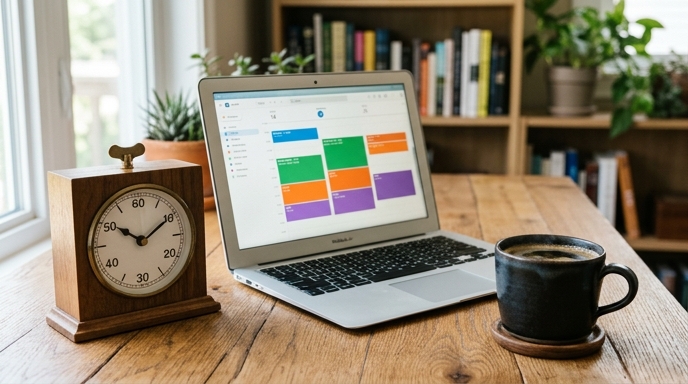
Timeboxing your search into three 90-minute sprints creates clear boundaries and keeps your energy focused on high-priority tasks.
The Three-Sprint Daily Architecture
Limit your desk work to three 90-minute blocks separated by physical breaks. This totals about four and a half hours of computer time—enough to run an active pipeline without burning out.
Splitting sourcing from application prep prevents context switching and keeps each block focused.
Active Break Hygiene Between Sprints
How you spend the breaks between sprints matters. Spending break time scrolling social media or reading news keeps your eyes on screens and your brain engaged in low-grade processing.
Step away from screens during scheduled breaks:
Protecting Deep Work from Sporadic Incoming Alerts
Reacting to incoming messages during focused work breaks concentration. If an ATS confirmation or recruiter note lands during Sprint 2, stopping to read it derails your application drafting.
Turn off desktop notifications and close your email tab during Sprint 2. Review new messages at the start of Sprint 3 or during your end-of-day shutdown routine.
Frequently Asked Questions
Isn't four and a half hours of job searching too little?
Four and a half hours of focused work yields higher-quality applications and better interview prep than eight hours of distracted browsing.
What should I do if a sprint finishes early?
If you complete your tasks in 60 minutes, log your output, step away from your desk, and take an extended break. Do not add busywork to fill the remaining time.
How should I adjust this schedule on interview days?
Replace Sprint 2 or Sprint 3 with your scheduled interview. Avoid booking more than two interviews on the same day when possible to preserve focus.