Building a Fact-Checking Subagent to Detect Hallucinated Skills on Resumes
Ads
When you use AI to tailor a resume, the model optimizes for keyword matches. This often causes qualification drift: converting surface familiarity into deep expertise, framing group efforts as solo leadership, or adding unmentioned libraries to match job descriptions.
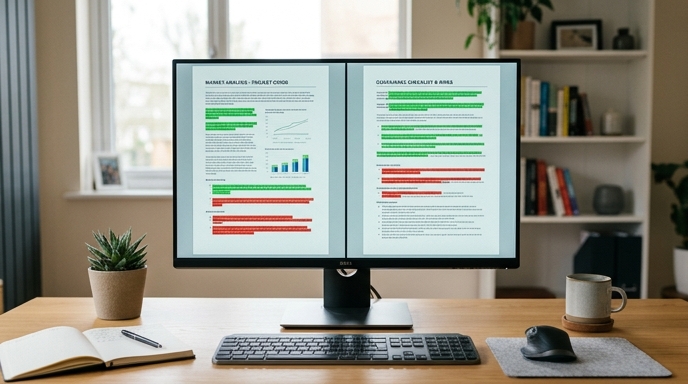
An exaggerated resume breaks down quickly during technical screens. Using an adversarial verification subagent helps avoid this by auditing tailored bullets directly against your raw career notes.
Understanding qualification drift in AI outputs
Qualification drift happens gradually. If a job demands Kubernetes experience and your notes state you "monitored container health in staging," an unguided LLM might generate: "Orchestrated enterprise Kubernetes clusters to maintain high availability."
That might match ATS keywords, but an interviewer asking about pod scheduling will quickly spot the discrepancy. An adversarial audit prompt flags those exaggerations before you apply.
How the adversarial audit works
The audit requires two separate text blocks:
The subagent checks Input B against Input A, flagging any claim, verb, metric, or tool that lacks evidence in your ground-truth notes.
The adversarial audit prompt to run tonight
Paste this prompt into a new chat session. Avoid using the conversation where you drafted the resume, since earlier context can bias the model toward its own text.
You are a strict technical auditor and corporate background investigator.

I will provide two texts:
TEXT A: My Verified Ground-Truth Work History (raw, factual notes).
TEXT B: A Tailored Resume Draft prepared for an application.

Your task:
1. Audit TEXT B line-by-line against TEXT A.
2. Flag any tool, programming language, platform, or framework in TEXT B not explicitly mentioned in TEXT A.
3. Flag any metric, percentage, or dollar value in TEXT B not directly supported by TEXT A.
4. Flag any verb that inflates scope (e.g., changing 'assisted with' to 'led', or 'monitored' to 'architected').
5. Output a structured report listing: Discrepancy Found | Location in Text B | Suggested Factual Correction.

If a bullet point is completely accurate based on TEXT A, label it 'VERIFIED'.

TEXT A (Ground Truth):
[PASTE YOUR RAW WORK LOG HERE]

TEXT B (Tailored Draft):
[PASTE YOUR TAILORED BULLETS HERE]
Reviewing the discrepancy report
The prompt returns an itemized audit of inflated wording. Watch closely for verbs suggesting total ownership. If the auditor flags that "architected" replaced "participated in design meetings," dial the language back to an accurate phrase like "contributed to system design."
Using defensible descriptions keeps your application competitive while ensuring you can comfortably discuss every claim in an interview.
Frequently Asked Questions
Can I use the same chat window that wrote my resume to audit it?
No. Start a fresh chat session. When models audit their own output within the same context window, they tend to defend their previous assumptions.
What if my original notes left out a real skill I actually have?
Add it to your ground-truth notes (Text A) first. Keeping an updated master record ensures subsequent audits have accurate facts to check against.
Does this audit slow down the application process?
Running the audit takes about two minutes, which is much faster than handling the fallout of misrepresenting skills during an interview.