Sports Broadcasting and Live Production Hiring: Crew Staffing, Technical Tests, and Shadow Shifts
Ads
Live sports broadcasting offers no margin for transmission delays or equipment failures. Mobile unit production companies and regional sports networks maintain strict operational standards for technical crews inside the production truck and along the sidelines.
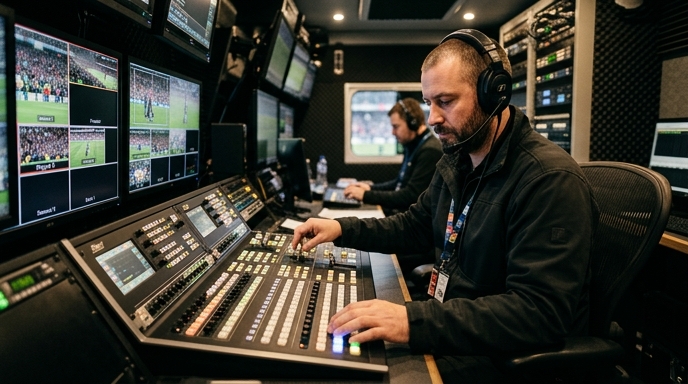
Understanding how sports broadcasting hiring works helps camera operators, replay engineers, and technical directors join regional crewing rosters and pass technical screenings.
The Structure of Sports Production Staffing
Most technical crew members on live sporting events are hired through crewing coordinators who manage rosters of freelancers and staff technicians. Hiring follows three primary steps:
What Crewing Managers Look for in Portfolios and Resumes
Broadcast crewing coordinators prefer gear matrices and credit lists over standard corporate resumes. Make your experience easy to scan.
Essential Resume Sections for Sports Broadcast Crews
Prompt to Format a Sports Production Credit List
Use this prompt to organize your live production experience into an industry-standard credit sheet:
You are a regional crewing coordinator for a live sports television network. Take this raw list of past sporting events and production experience: [PASTE EXPERIENCE] Reformat this into an industry-standard broadcast credit sheet: 1. Group credits logically by role and broadcast tier. 2. Create a clean 'Equipment & Hardware Competencies' section with industry-standard naming. 3. Flag any missing details that a crewing manager would need before booking a day rate.FAQ
How do camera operators get assigned to major sports broadcasts?
Camera operators typically begin on stationary wide-angle high-home or slash cameras before moving to handheld sideline positions, end-zone cameras, or specialized robotic rigs.
Are union cards mandatory for sports broadcasting?
In major metropolitan markets and for national network broadcasts, crewing often runs through union agreements such as IATSE. Regional college streaming and minor-league productions regularly hire non-union freelancers.
What should I bring to my first shadow shift in a broadcast truck?
Bring a multi-tool, a small flashlight or headlamp, board tape, fine-point permanent markers, a broadcast headset with standard connectors, and a printed copy of the production schedule.